Our work with governments, the private sector and civil society has promoted disclosure and empowered citizens of our partner African countries to hold decision makers accountable.
CoST supports national and subnational members across Africa to put systems in place that allow the public to access reliable, detailed and easy-to-understand infrastructure project information. Select a chapter to read its profile.
In 2019, the Mozambique Road Fund submitted a membership application letter to the CoST board, as part of the CoST competitive process.
The Road Fund's interest in joining CoST came as a result of a workshop held to explore the need for greater transparency and accountability in Mozambique's infrastructure sector. The workshop focused on the CoST core features of assurance, disclosure, social accountability and multi-stakeholder working and their potential impact in Mozambique. The Road Fund, which hosts the CoST Mozambique programme, stated in its application that CoST could be a catalyst for addressing some of the challenges the country faces.
Mozambique plans to disclose data in line with the Open Contracting for Infrastructure Data Standard (OC4IDS) for projects carried out through the Integrated Feeder Road Development Project. To improve public engagement in these projects, the programme engages newspapers and community radio stations to disseminate information and assurance findings in local dialects.
Read MoreMalawi joined CoST during the initiative's pilot stage in 2008, after the Government of Malawi expressed interest in its principles through the Office of the Director of Public Procurement. With around 70% of public budgets allocated to procurement, and a 2008 baseline survey showing that data publication in public infrastructure stopped at the contract-award stage, the case for structured disclosure was clear.
The programme is hosted by the National Construction Industry Council (NCIC) and guided by a committed Multi-Stakeholder Group. CoST Malawi has launched assurance reports covering over 90 infrastructure projects, and secured a Formal Disclosure Requirement through the June 2017 amendment of the public procurement law, which formally recognises the CoST Infrastructure Data Standard.
The chapter runs a disclosure portal and has developed a disclosure manual and monitoring tools for civil society and the media, underpinning a strong social accountability approach.
Read MoreUganda's membership application was made by the Uganda National Roads Authority (UNRA) in 2013, and the country joined CoST in 2014, committing to enhance transparency and accountability in the infrastructure sector through monitoring, disclosure and knowledge sharing. The chapter is hosted by the Africa Freedom of Information Centre (AFIC).
Since joining, Uganda has embraced the initiative's core features of data publication, assurance, social accountability and multi-stakeholder working. Its first scoping study, released in 2017, was declared a "recipe for change" by the Minister of Works and Transport.
CoST Uganda has taken the infrastructure transparency message directly to communities through district-level integrity promotion forums and Community Barazas, an approach to citizen engagement that has been adopted across the wider CoST family.
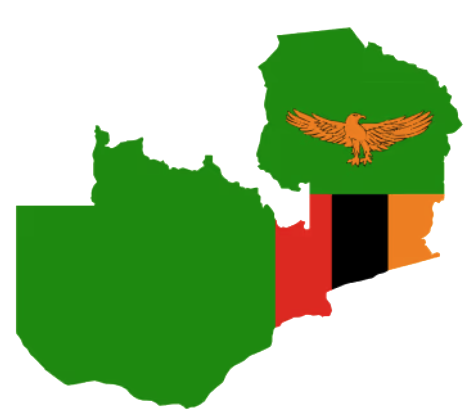
Read MoreZambia is on a mission to attain lower-middle-income status by 2030, a vision that depends on major investment in transport, energy, water and sanitation, housing and telecommunications infrastructure. Rising demand has, however, been accompanied by corruption risks, with high-profile projects reported as inflated, especially at the tendering phase.
Ahead of rejoining CoST, Zambia laid a solid foundation: institutional policy reforms to strengthen contractor capacity and technical compliance, and a new law regulating public procurement. Its membership application recognised infrastructure transparency as central to strengthening the economy and improving lives.
CoST Zambia was launched on 25 June 2025 under the Ministry of Infrastructure, Housing and Urban Development, before a gathering of stakeholders and journalists that carried the message across the country's media.
Read MoreThe twin-city of Sekondi-Takoradi joined CoST in March 2019 as the first subnational member of the CoST International family, championed by the Sekondi-Takoradi Metropolitan Assembly (STMA) and guided by an independent Multi-Stakeholder Group.
This platform is the chapter's digital home. Visit the dedicated CoST Sekondi-Takoradi page for the full story of the programme.
Visit the CoST Sekondi-Takoradi pageKakamega, the first county in Kenya to join CoST, is the 10th largest of the country's 47 counties, home to two million people, with over 20% of its budget allocated to infrastructure across transport, education and WASH.
Its membership application impressed the CoST Board with high-level political support from the Cabinet, the Governor and the Head of Public Service, a strong legal and institutional framework, and membership of the Open Government Partnership.
CoST Kakamega is hosted by the Government of Kakamega County, and aims to transform planning and design, compliance with laws and standards, private sector engagement and coordination with government agencies, improving project timelines, quality and citizen feedback.
Read MoreNigeria hosts two subnational CoST chapters, Kaduna State and Sokoto State, extending the initiative's growing footprint across the country, where infrastructure stock sits well below the World Bank's benchmark and the delivery of public works is shared between the states and the national government.
Kaduna, one of Nigeria's 36 states, sits in the Northwest with a population of over 10 million across 23 local government areas. Before joining CoST it faced eroding trust among sector players, declining quality of public infrastructure, delayed payments and incomplete, hard-to-understand data. Membership helps the state rebuild trust between government, the private sector and civil society through its Multi-Stakeholder Group, and supports the publication of infrastructure data backed by independent assurance.
Sokoto State is among the newest subnational members of the CoST family, committing to the same approach of disclosure, independent assurance, multi-stakeholder working and social accountability in the delivery of its public infrastructure.
Read More