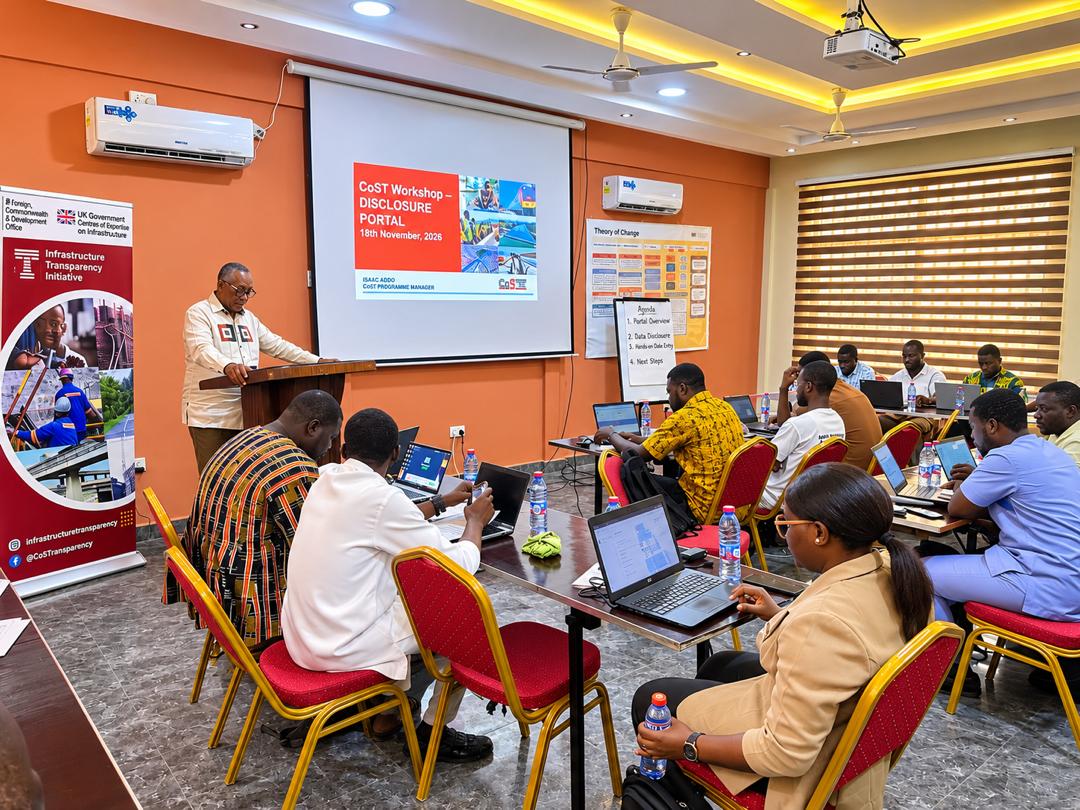
Sekondi-Takoradi has relaunched its Infrastructure Data Publication Portal and Analytical Dashboard, giving the public wider access to information on infrastructure investments across Ghana's Western Region. The relaunch took place on 18 November 2026.
The updated platform now covers 14 procuring entities, up from eight. That gives citizens, journalists and civil society groups more material for tracking how public money is spent and whether projects are delivered. As of 12 November, the portal listed 204 projects with disclosed budgets totaling roughly GH₵256.8 million (over US$23.4 million). These numbers will change as participating institutions add and update their records.
The upgraded dashboard makes it simpler to look at how contracts were procured, how much competition there was for tenders, and where costs and timelines have slipped. Users can use these views to spot projects that deserve a closer look. Separate sections cover funding, feasibility, how well entities are publishing their data, and how projects contribute to the Sustainable Development Goals, linking individual investments to wider social, economic and environmental aims.
The portal works alongside the programme's Electronic Infrastructure Monitoring Tool, which lets citizens take part in tracking project delivery.
Because the platform follows CoST and Open Contracting Partnership's international data standards (IDS/OC4IDS), its data can be downloaded for analysis and reuse. Journalists and communities can use it as evidence when asking questions and pushing for better infrastructure spending.
Chairperson of the CoST Sekondi-Takoradi Multi-Stakeholder Group, Architect Eugene Fredua Ofori-Atta, described the relaunch as another important step toward transparency, accountability and citizen participation in public infrastructure delivery. He noted that the refreshed platform is more accessible, searchable and useful to both public institutions and citizens.
Together, the tools extend CoST Sekondi-Takoradi's work on data publication, independent review and social accountability. They aim to help communities engage the institutions responsible for public infrastructure and hold decision-makers to account for investments that shape daily life.